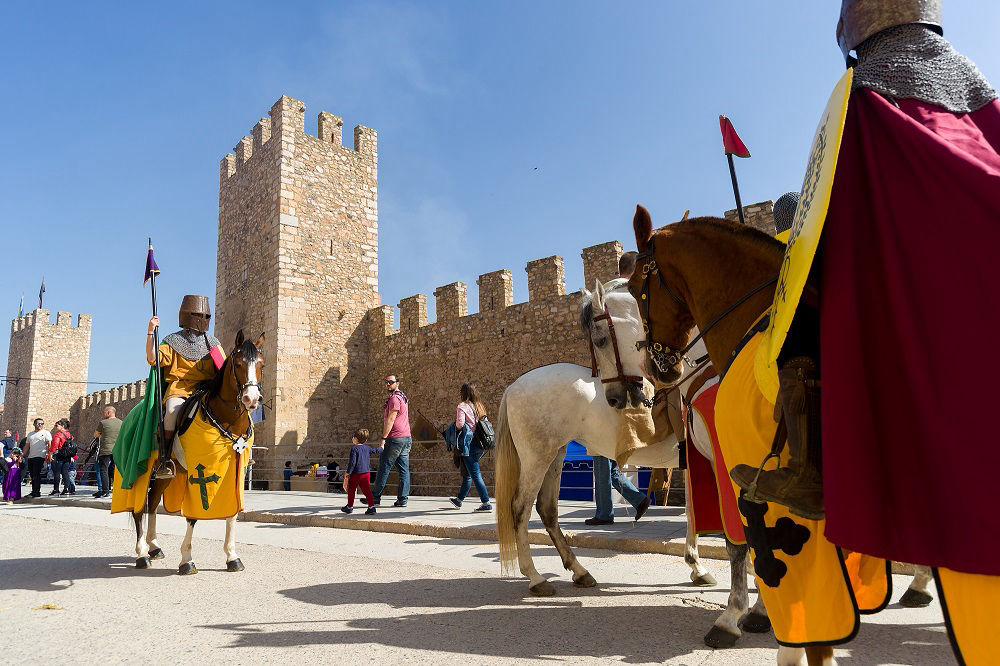
In the Palaeolithic period, the mountain area of Montblanc was already inhabited.
From the 4th to the 1st century BC on the Pla de Santa Bàrbara there was an Iberian settlement. Roman settlements dating from the 2nd century BC and the 2nd AD have also been found.
In the 10th and 11th centuries, during the period of the Christian conquest, there were once again settlements after centuries of abandonment.
Around 1080, a first settlement called Duesaigües was created near the confluence of the Francolí and Anguera rivers. It was a definitive settlement by the year 1150, once the Christian conquest was over.
The king Ramon Berenguer IV, in 1155, gave the first population letter to Pere Berenguer de Vilafranca, who was nominated mayor. He changed the name of Duesaigües to Vila-salva (village free of taxes), so as to favour its development.
Among the privileges that Vila-salva had, we can mention an extensive administrative area, the duty-tax-free and the free use of two important elements for the economical progress derived from the forest (firewood for building and for homes) and the use of water (agriculture, flax and hemp industry, and mills).
As Vila-salva was under threat from the flooding of the Anguera and Francolí rivers and in a flat area that was difficult to defend, the king Alfons I ordered Pere Berenguer to move Vila-salva to the hill of the Pla de Santa Bàrbara. He wanted a strong town halfway between Tarragona and Lleida, with a good strategic situation.
The town was renamed Montblanc because of the lack of vegetation on the hill where the first settlement was located.
The new population letter was given by the king Alfons I in February 1163 and it involved the changing of place, but respecting all the rights given in the first population letter.
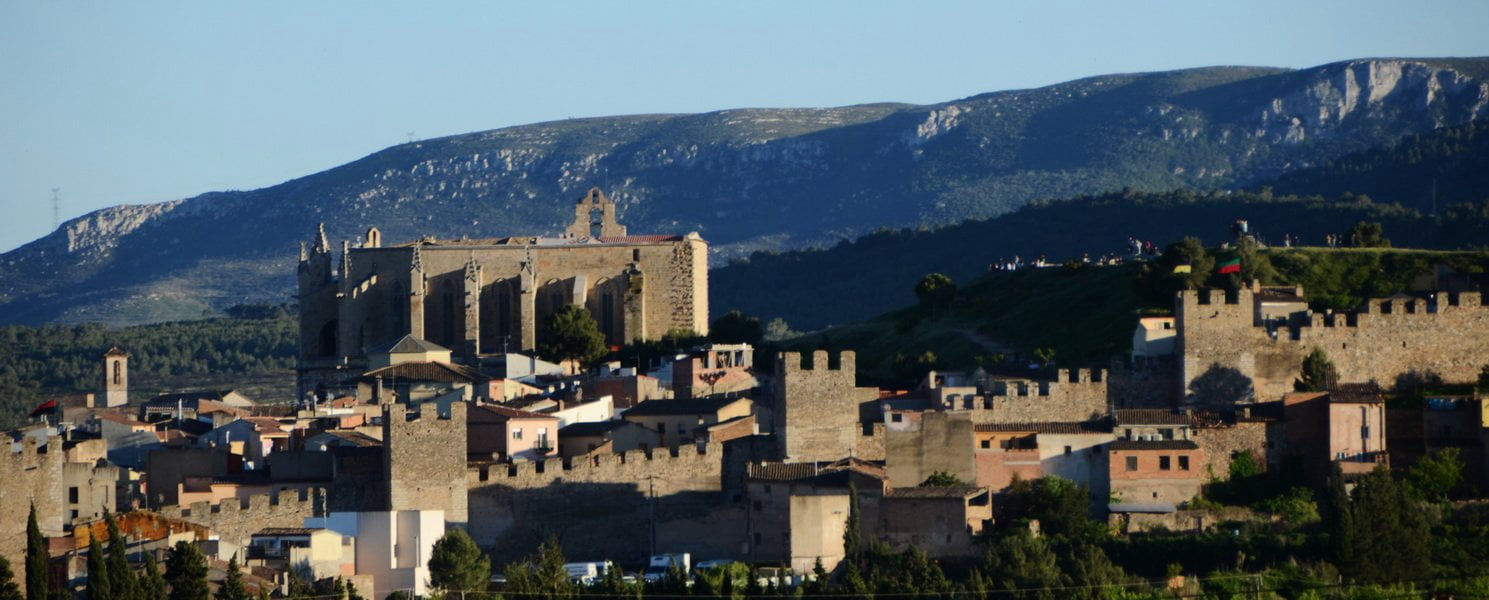
In 1170, the castle on the top of the hill is already documented and also the primitive Romanesque church of Santa Maria.
During the 12th century the town obtained different privileges and royal favours conferred so as to increase its growing and at that time it already had a market.
But it was during the 13th century when Montblanc experienced an urban and demographic expansion, thanks to the exemptions, prerogatives, the granting of fairs and markets. The constitution of the municipality also took place.
Montblanc was the centre of a vegueria and it was also the administrative, political military and religious centre of a big area, and one of the most important towns in the south of Catalonia. The main activity of its inhabitants was the agriculture, although there were also artisans (among them there were the ragmen).
At this time the construction of the most important monuments in the town began: the church of Sant Miquel, the convents of Sant Francesc, La Serra and La Mercè, and the hospitals of Sant Bartomeu and Santa Magdalena. And also some civil buildings such as the Town Hall, the Royal Palace and the Josa House.
The Jewish quarter was populated and, over the years, acquired great economic and commercial importance.
The town had its maximum splendour in the first half of the 14th century when it was consolidated its position as a town with an important political weight and an outstanding socio-economic dynamic. It became the seventh town in Catalonia where the General Courts were held on four occasions. Moreover, in 1387 the Duchy of Montblanc was created.
In the 14th century the works continued and the most emblematic ones began: the walled enclosure and the Gothic church of Santa Maria. The church-hospital of Sant Marçal and the Alenyà palace were also constructed. The town improved the most important services such as: the covering of the Riuot (stream which was in fact the main sewer of the town), public baths, prison, mills, ovens…
During the second half of the 14th century the town entered in a long period of decline. A series of epidemics and bad harvests were the prelude of three centuries of recession.
Besides the epidemics and bad harvests at the end of the 15th century there were the wars between the king Joan II and the Generalitat (Catalan government). The town suffered a great decline, the abandoned houses fell down, the walls remained in a bad state and most of the buildings in Montblanc were ruined.
In spite of this some unfinished buildings were then finished and it was constructed the Castlà (the king's military representative) palace. In the 16th century there was a slight recovery and the Desclergue house was enlarged, the Pont Vell was restored and it was constructed the cloister of the hospital of Santa Magdalena.
During the Reapers' War (17th century), part of the wall and the façade of the church of Santa Maria were destroyed, and the archives were burnt. There were many assaults, looting and fires that put an end to the initial greatness of Montblanc, which definitively lost its political and economic weight.
Despite the negative consequences of the War of the Spanish Succession (18th century), with more looting in the town, and other epidemics, floods and bad harvests, the 18th century saw Montblanc recover thanks to agricultural development.
During the second half of the 18th century there was a demographic increase. New people came to the town and the population increased about 300%. Because of this in some houses third floors were risen, old houses were restored and there were constructions next to the walls.
The economical activity increased. The outskirts were turned into an industrial place, there was also craftsmanship, the cereals growing was substituted by the vineyard, which during the 19th century spread for all the municipality and it become a single crop farming.
Communications favoured economic development in the 19th century as they facilitated commercial transactions. The roads to Lilla (1821) and Reus (1843) were opened and, finally, the railway arrived (1863).
The municipality of Montblanc reached its historical maximum population in 1860 with 6,628 inhabitants during the period known as the Gold Fever.
Between 1873 and 1880, the transversal road was built (the present street Muralla de Santa Tecla), which replaced Major street (main street) as a traffic area and led to a new urban development. New services were created, such as gas lighting, the construction of the first pavements, a minimal sewage system, public fountains and a new cemetery.
From 1885-86 wine prices began to fall and another period of social upheaval began, a prelude to the serious slump caused by the outbreak of phylloxera in 1893. Phylloxera killed the vines and suddenly impoverished the entire population, as the economy revolved around vines, wine and its by-products. Montblanc plunged into a deep economic and demographic crisis, from which it did not begin to recover until 70 years later.
At the beginning of the 20th century it was tried to mitigate the crisis through the cooperative cellars, but the Spanish Civil War caused a new stagnation. In 1947 Montblanc was declared Monumental Artistic Ensemble and it began a slow restoration of its monuments.
In the 1960s there was an industrial and cultural recovery which led to a slow increase in the population after having reached a minimum of 4,421 inhabitants in 1950.
The establishment of several industries in the 1970s involved a progressive demographic growth and urban expansion that caused a loss of population in the old town.
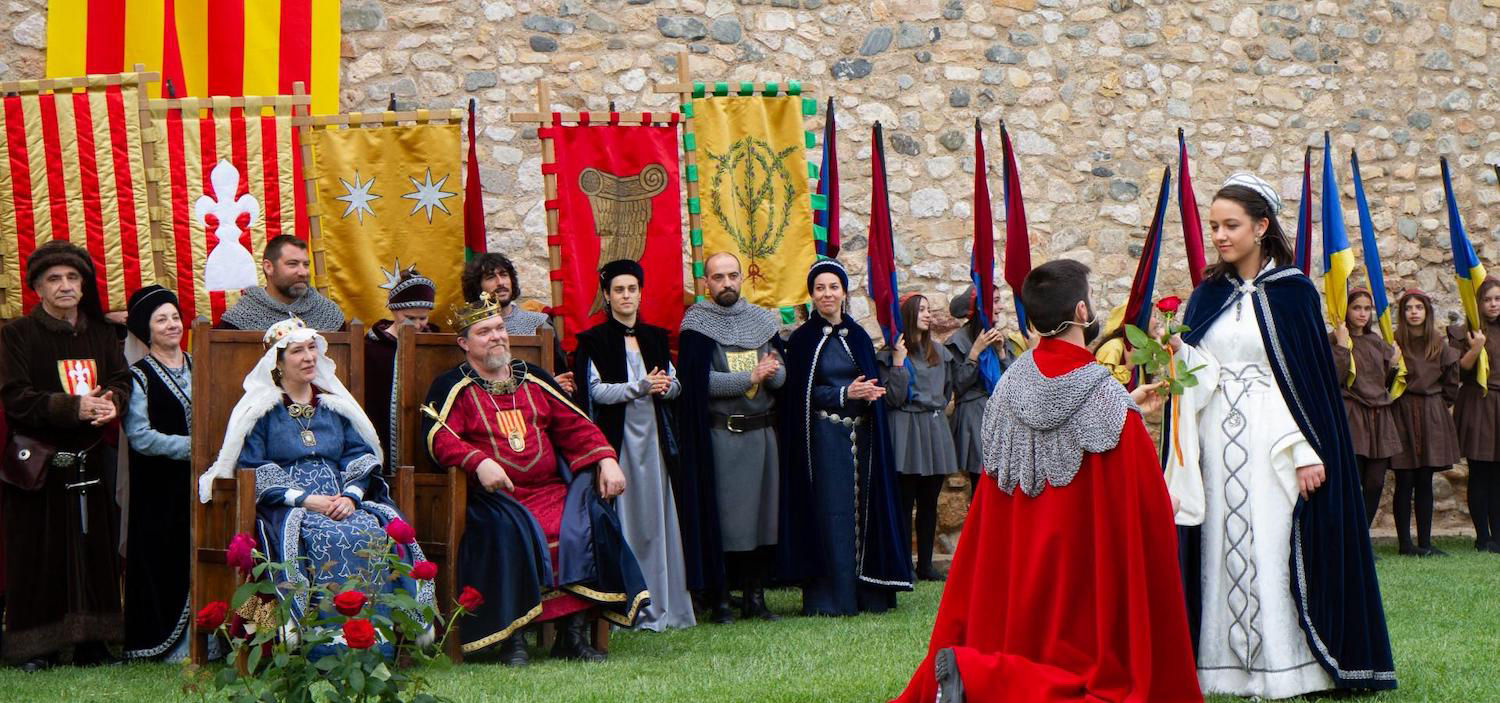
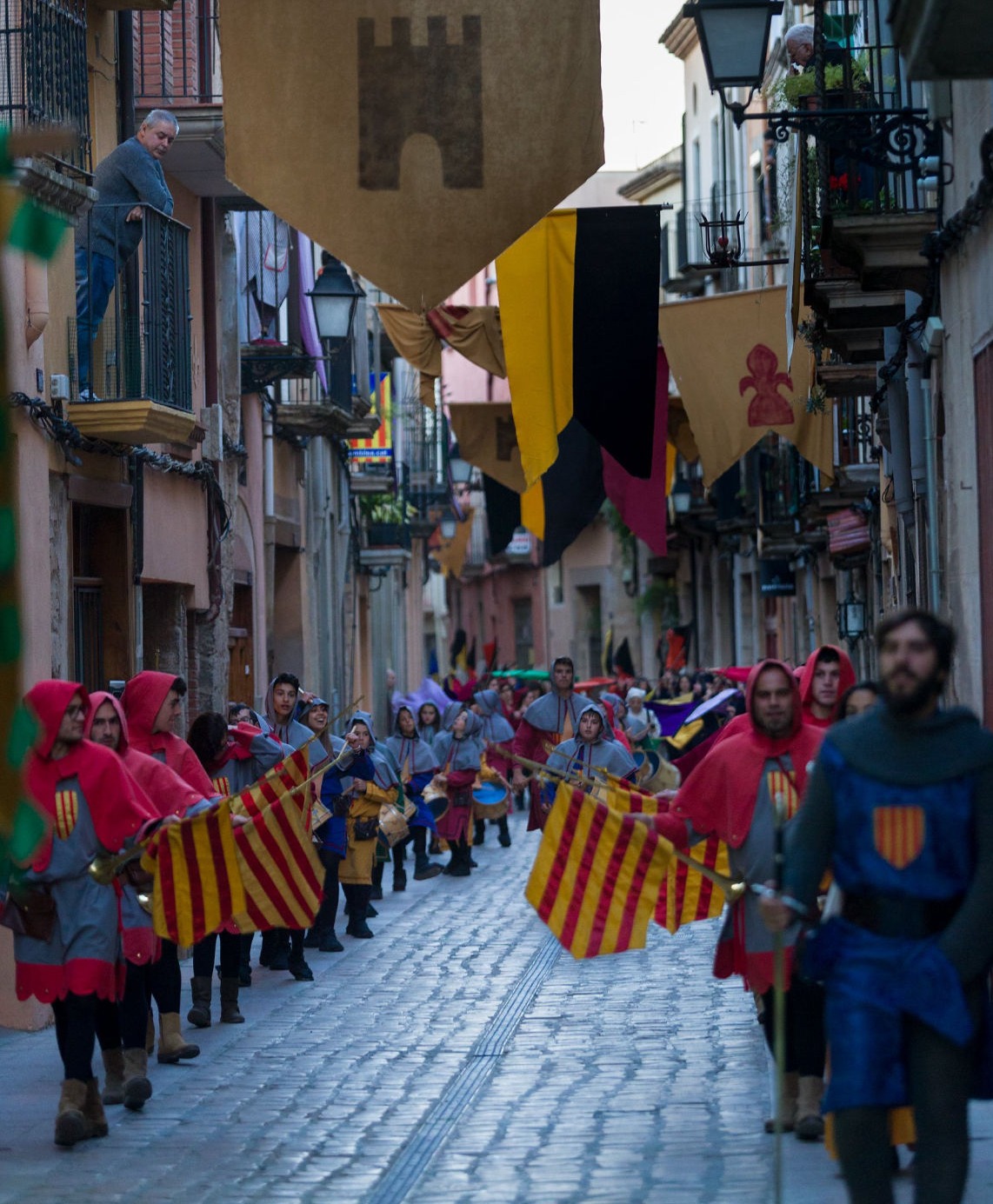
At the same time, with the recovery of democratic institutions, the municipality was able to undertake the restoration of its monuments. Moreover, the very active civil society has made Montblanc a point of cultural, leisure and festive reference.
In 2000, a commitment to tourism as an economic pillar of the town began with the creation of the Tourist Office.
Currently, Montblanc is the capital of Conca de Barberà and has 7,539 inhabitants (2024).
It is the commercial, industrial and service centre of the region and the most dynamic town. It has a wide range of attractions: monuments, nature, gastronomy, crafts, agri-food products and interesting events.
AI Website Creator